
Northbourne Avenue and CivicRed light/speed cameras around Barry Drive and Bunda Street
Canberra, Australia
Speed Cameras in Canberra
For speed cameras Canberra drivers meet fixed speed, red light/speed, mobile van and point-to-point enforcement. The ACT also publishes camera locations and uses school and roadwork enforcement where the posted limit applies.
Speed camera locations in Canberra
Use camera information alongside posted signs, junctions, roadworks and changing conditions.
Common speed-camera locations
Where enforcement is concentrated. Camera sites change, so posted signs always come first.
Hindmarsh DrivePoint-to-point between Yamba Drive and Dalrymple Street
Belconnen and Gungahlin arterialsGinninderra Drive, Gungahlin Drive and nearby intersections
Mobile speed camera sitesMore than 900 approved van locations across Canberra
Speed cameras Canberra: what operates
Canberra is covered by the ACT road safety camera program, managed through Access Canberra. The program includes fixed red light/speed cameras, fixed mid-block speed cameras, mobile speed camera vans, one point-to-point average speed system and separate traffic detection devices for mobile phone and seatbelt offences.
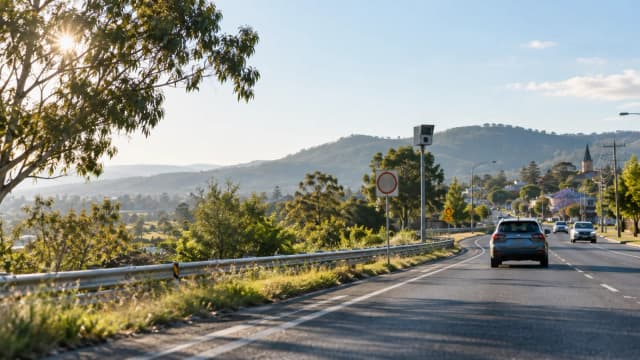
Fixed mid-block cameras are used at black spots and high-risk locations, with advance signs on the approach. Red light cameras in Canberra are usually red light/speed cameras, so they can detect a vehicle entering on red and can also detect speeding through the intersection. The ACT has one point-to-point system on Hindmarsh Drive between Yamba Drive and Dalrymple Street, measuring average speed over the route.
Mobile speed cameras Canberra wide are deployed by the Access Canberra Traffic Camera Compliance team. The government says there are more than 900 approved mobile camera van locations, chosen using risk, crash harm, traffic and speeding data. Mobile vans can operate on an anywhere, anytime basis, including school zones.
Where cameras are concentrated
The best way to think about speed camera locations Canberra drivers are likely to meet is by road type. Fixed red light/speed cameras are concentrated at signalised intersections where right-angle crashes are a risk, including Civic, Belconnen, Gungahlin, Hume, Kambah, Manuka, Phillip, Watson and Weston. Certificate listings and the ACT open data map identify examples such as Northbourne Avenue at Barry Drive, Barry Drive at Marcus Clarke Street, Ginninderra Drive at Aikman Drive, Hindmarsh Drive at Yamba Drive and Lanyon Drive at Sheppard Street.
Fixed speed-only cameras sit on higher-risk mid-block sections, including parts of Hindmarsh Drive, Tuggeranong Parkway approaches, Cotter Road and other arterial routes. Mobile sites are much broader, with vans rotating through suburban collectors, school approaches, town centres, arterial roads and some roadwork areas. At roadworks, the enforceable limit is the signed temporary limit, for example a reduced 60 km/h work-zone limit on major projects.
- Civic and Northbourne Avenue intersections
- Hindmarsh Drive corridor
- Belconnen and Gungahlin arterial intersections
- Rotating mobile van sites across suburbs
Operating hours and local speed limits
Fixed speed and red light cameras operate continuously unless out of service. Access Canberra states fixed cameras are monitored 24/7 through a central system, and the approach signs for fixed speed cameras state 24-hour operation. Red light/speed camera signs are placed before the intersection, while point-to-point camera signs appear before detection points and at the midpoint.
The ACT default speed limit in built-up areas is 50 km/h unless a sign says otherwise. Major urban roads are commonly 60 km/h, parkways and rural arterial roads can be 80-100 km/h, and town centres are often 40 km/h. The ACT lists 18 town centres with 40 km/h limits operating 24 hours a day, 7 days a week.
School zones are generally 40 km/h when the school zone signs are open, typically 8 am to 4 pm Monday to Friday on school days. Work zones use the posted temporary speed limit. Always follow the sign at the road, not a remembered normal limit.
Fines, demerits, notices and reviews
Camera-detected offences are not issued automatically. The system records a possible offence, then Access Canberra reviews the images or video before issuing an infringement notice. If a vehicle is detected speeding, running a red light or committing another camera offence, registration can also be checked.
For personal notices in late 2026 camera data, common ACT camera penalties include about A$394 and 1 demerit point for up to 15 km/h over, about A$563 and 3 points for more than 15 km/h but not more than 30 km/h over, and about A$619 and 3 points for a red light offence. Higher speed bands, school zones, corporate notices and holiday-period demerit rules can change the outcome. Full ACT licences usually have a 12-point threshold, while learner and provisional thresholds are lower.
Camera infringement notices are generally sent to the registered operator by mail. The ACT handbook says camera notices are usually mailed within five working days, but timing can vary. From the issue date, you normally have 28 days to pay, ask for time to pay, nominate another responsible driver, seek withdrawal or dispute liability. If you dispute liability and the notice is not withdrawn, the matter can go to the ACT Magistrates Court. This is general information only, not legal advice.
Radar detecting or jamming devices are illegal in the ACT. If you use the Speed Camera Radar Detector app, set any route or alert preferences before driving, and treat it only as a planning aid because camera data and enforcement activity can change.
Camera types in Canberra
01
Always in place
Fixed cameras
Permanent cameras at fixed locations
02
Flexible location
Mobile cameras
Moved regularly to different locations
03
Junction safety
Red light cameras
Detect red-light violations at junctions
04
Zone monitoring
Average speed cameras
Measure average speed over a distance
Speeding fines
| Level | Typical outcome | Licence impact |
|---|---|---|
| Up to 15 km/h over | About A$394, or higher in a school zone | 1 demerit point |
| 15-30 km/h over | About A$563 for a personal notice | 3 demerit points |
| Red light or red arrow | About A$619 for a personal notice | 3 demerit points |
Amounts and thresholds can change. Check current official guidance for the relevant state, city or court.
Frequently asked questions
Are there red light cameras Canberra drivers should know about?
Yes. The ACT uses fixed red light/speed cameras at selected signalised intersections, and they can enforce red light running and speeding.
Are mobile speed cameras Canberra wide or only at listed spots?
Mobile vans rotate through more than 900 approved locations across Canberra. They can operate at different times and may be used in school zones, on suburban roads, arterials and some roadwork areas.
Do Canberra speed cameras operate at night?
Fixed cameras operate continuously unless out of service. Mobile cameras can operate at varied times, including at night, and may use flash units when needed.
Can I see official speed camera locations Canberra wide?
Yes. The ACT Government publishes red light, fixed speed, point-to-point and mobile speed camera locations through its open data map.
Can I contest a camera fine in the ACT?
Yes. You can manage the notice, nominate another driver, request withdrawal or dispute liability within the ACT infringement process. If a dispute is not withdrawn, it may be heard in the ACT Magistrates Court.
Learn more
Safer driving
How to Avoid Speeding Fines in Australia
Build better speed awareness with preparation, clear limits and fewer last-second decisions.
Road rules
Are Speed Camera Detectors Legal in Australia?
A practical state-by-state starting point for understanding detector and alert-app rules.
Drive with more context
Download on theApp StoreKnow what is ahead before you reach it.
Explore camera locations, navigation and timely alerts in Speed Camera Radar Detector.