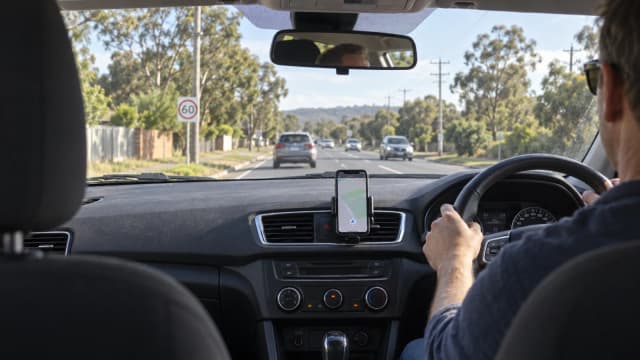
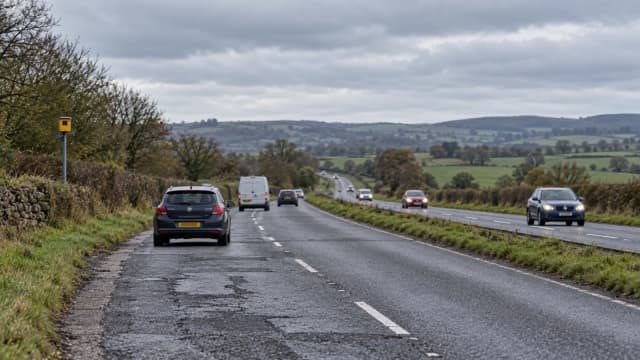
Speeding fines SA start at $215 and 2 demerit points for driving less than 10 km/h over the limit, before the Victims of Crime levy is added. At the top end, exceeding the speed limit by 45 km/h or more attracts a $2,018 expiation fee, 9 demerit points, automatic 6 month loss of licence and possible wheel clamping or impounding.
This guide presents general information. Check current official road rules and follow every posted sign.
Speeding fines SA: current penalties
South Australia lists speeding penalties by how far the vehicle was detected over the limit. The figures below are the expiation fees that applied from 1 July 2026. They do not include the Victims of Crime levy, which is added to expiation fees. For adults, that levy is $108. For people under 18, it is $20.
For ordinary vehicles, the current speeding fines South Australia drivers are most likely to see are: less than 10 km/h over the limit, $215 and 2 demerit points; 10 km/h or more but less than 20 km/h, $484 and 3 points; 20 km/h or more but less than 30 km/h, $987 and 5 points; 30 km/h or more but less than 45 km/h, $1,793 and 7 points; and 45 km/h or more, $2,018 and 9 points.
There are higher expiation fees for road trains. Those listed fees are $572, $735, $1,132, $2,081 and $2,098 across the same speeding bands. The same demerit point bands apply, but drivers of heavy vehicles should also check any licence, work and fatigue management consequences that may apply to their situation.
- Less than 10 km/h over: $215, 2 points
- 10-19 km/h over: $484, 3 points
- 20-29 km/h over: $987, 5 points
- 30-44 km/h over: $1,793, 7 points
- 45 km/h or more: $2,018, 9 points and automatic 6 month disqualification
What demerit points mean in South Australia
All drivers start with zero demerit points. In South Australia, points are counted from the date of the offence, not the date the notice is paid. They are recorded once the expiation is paid or the matter is finalised in court, and they expire 3 years after the offence date.
A full licence holder may be disqualified if they reach 12 or more demerit points within a 3 year period. Learner and provisional drivers are in a stricter position: 4 or more points may lead to disqualification, and a learner or provisional driver can also lose their licence for exceeding a speed limit by 10 km/h or more.
South Australia does not use double demerit points. That is important for interstate drivers who may be used to holiday double-demerit periods in other states, but it does not make speeding low risk. One 20-29 km/h speeding offence is 5 points, which is already more than enough to put many learner or provisional drivers at risk.
- Points run from the offence date
- Points expire after 3 years
- No double demerit points in SA
- 12 points can affect a full licence
- 4 points can affect learner and provisional licences
Speed cameras South Australia drivers should know about
Speed cameras South Australia wide include fixed speed and red light cameras, average speed cameras and mobile speed cameras. Fixed cameras use sensors in each lane to measure vehicles passing the camera. Mobile cameras use radar to detect vehicle speed, and average speed cameras can issue a fine if a vehicle is over the limit at a camera point or if its average speed between points is too high.
SAPOL publishes selected traffic safety camera locations for metropolitan and country areas, and states that locations may change without notice. The fixed network includes intersection cameras, pedestrian activated crossing cameras, level crossing cameras and point to point sites. Not every listed fixed site is necessarily commissioned or operating at any point in time.
Mobile speed cameras SA locations are selected by SAPOL using a risk rating approach. Factors include casualty crash history, Traffic Watch reports, locations with expiations for exceeding the limit by 30 km/h or more, and other road safety offences. The stated purpose is deterrence and crash reduction, not simply catching drivers by surprise.
- Fixed speed and red light cameras
- Average speed, or point to point, cameras
- Mobile speed cameras
- Some level crossing and pedestrian crossing camera sites
- Safe-T-Cam sites for unregistered vehicles
How camera fines are issued
For camera offences, the notice is issued to the registered owner of the vehicle. If the owner pays the expiation, the demerit points are recorded against that person. If someone else was driving, the owner can nominate another driver in the way required by SAPOL.
A speed or red light camera expiation can generally be dealt with by viewing the photographic evidence, nominating the driver, requesting a review, paying the notice or electing to be prosecuted. Paying the notice is not just a payment step. It usually finalises the expiation and causes any points to be recorded against the person named on the notice.
Businesses need to take camera notices seriously. South Australia has a body corporate fee where a company vehicle is involved in a camera-detected red light or speeding offence and the business fails to nominate the responsible driver. The MyLicence summary lists the body corporate fee as $1,800 for a red light or speeding offence, and $3,600 where the same company vehicle matter involves both red light and speeding offences.
- Check who the notice names
- Check the alleged speed and location
- Do not ignore the due date
- Nominate the driver if required
- Seek proper advice before electing court
Built-up areas, school buses and emergency zones
A common trap for drivers is assuming that a missing sign means there is no enforceable limit. In built-up areas in South Australia, the default speed limit is 50 km/h unless another limit is signed. SAPOL states that there is no legal requirement to have 50 km/h signs in built-up areas.
The same speeding penalty bands also apply to exceeding the 25 km/h limit when passing a school bus, a breakdown services vehicle or an emergency service speed zone. That means a small-looking speed difference in one of these situations can still carry the ordinary speeding fine and demerit point consequences.
For visitors, the practical rule is simple: drive to the signed limit, slow down early for changed conditions and assume urban streets may be 50 km/h unless signs say otherwise. If you use the Speed Camera Radar Detector app, set up alerts before you start driving and treat them only as a planning aid, not a substitute for watching signs and conditions.
If you receive a South Australian speeding notice
Read the notice carefully before doing anything else. Check the registration, location, date, alleged speed, speed limit, fee, levy and the options shown on the notice. If it is a camera notice and you were not driving, deal with the driver nomination process before paying or entering a payment arrangement.
If you cannot pay in full, the Fines Enforcement and Recovery Unit may be able to help with a payment arrangement. Be careful: entering a payment arrangement can prevent you from later electing to be prosecuted, nominating another driver or applying for a review, and any demerit points may be issued to the person named on the notice.
This article is general road safety information, not legal advice. If the notice could affect your job, licence, insurance or immigration status, or if you believe the notice is wrong, get advice before the due date. Ignoring an expiation can lead to extra fees and enforcement action, including restrictions connected with your driver licence or vehicle registration.
- Do not ignore the notice
- Check whether you were the driver
- Act before the due date
- Keep copies of anything submitted
- Ask Service SA about licence status if unsure
A simple pre-drive checklist
- Set the route and alerts before moving.
- Check the first posted limit after every major turn.
- Leave enough space to adjust without abrupt braking.
- Use official sources when a rule affects your licence.