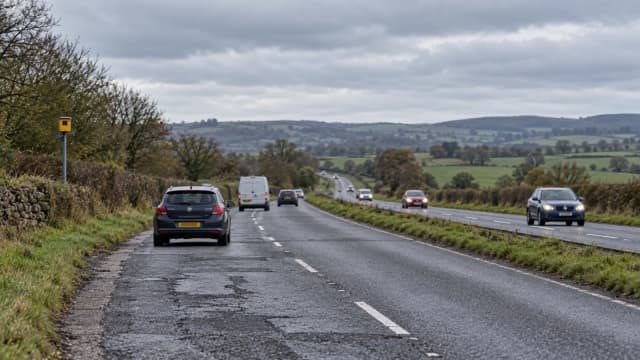
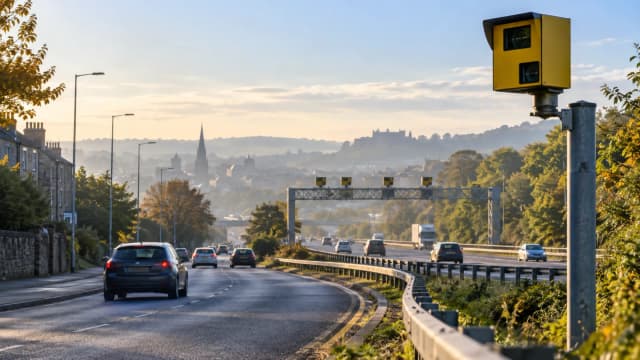
A speed awareness course is an educational alternative to a speeding prosecution, offered by the police for some lower-level speeding offences. If you are eligible and complete the course by the deadline, you normally avoid the £100 fixed penalty and 3 penalty points, but you pay the course fee yourself and the offer is never automatic.
This guide presents general information. Check current official road rules and follow every posted sign.
Speed awareness course cost in 2026
The speed awareness course cost is not a single UK-wide figure. The fee is set through approved course providers and can vary by police area, delivery provider and booking route. In current official provider examples, courses are commonly in the mid-£90s: Staffordshire lists its National Speed Awareness Course at £93, while Nottinghamshire’s UKROEd provider FAQ states £97 from 1 April 2026. Suffolk’s published course FAQ has listed £95. Treat these as examples, not a guaranteed national tariff.
The course fee is separate from the fixed penalty. If you accept and complete the course, the speeding matter is normally closed with no fine and no penalty points for that offence. If you do not accept the course, do not complete it, miss the deadline or are removed for failing to meet attendance requirements, the case can revert to the normal enforcement route, such as a fixed penalty or court process.
Do not pay the Fixed Penalty Notice if you are choosing the course. Some official course providers warn that paying the fine can cancel the course place and lead to points being added to the licence. If you are unsure which option you have accepted, use the police reference details in your offer letter and check before making a payment.
- Typical current provider examples: about £93–£97
- Paid by the driver
- No separate £100 fine if the course is completed
- Fees and refund rules vary by provider
- Booking deadlines are set in the police offer letter
Who is eligible for a speed awareness course?
Eligibility starts with the police. You cannot self-refer to a National Speed Awareness Course, and you do not have a right to one simply because this is your first offence or because the speed was only slightly over the limit. The enforcing police force must decide that a course is appropriate for the offence and must send you an offer.
The two most important national conditions are that the offence falls within the force’s course criteria and that you have not completed the same speed awareness course within the previous 3 years. UKROEd also records accepted course offers on a national database for 3 and a half years so that future eligibility can be checked. If you have recently completed the same course, expect the normal fixed penalty or court route instead.
The National Police Chiefs’ Council guidance gives disposal ranges used to support consistency, but it also says police can act outside those thresholds depending on the circumstances. For the National Speed Awareness Course, the guidance lists these course ranges where eligibility criteria are met: 24–31mph in a 20mph limit, 35–42mph in a 30mph limit, 46–53mph in a 40mph limit, 57–64mph in a 50mph limit, 68–75mph in a 60mph limit and 79–86mph in a 70mph limit. These are not extra legal speed limits. They are disposal guidance, and police can still enforce below those figures where appropriate.
- Police offer required
- No self-referral
- No same course in the previous 3 years
- Lower-level speeding only
- Final decision by the enforcing police force
England, Wales, Scotland and Northern Ireland
For most drivers in England and Wales, the course discussed here is the National Speed Awareness Course within the National Driver Offender Retraining Scheme. It is designed and approved nationally, so the educational content is intended to be consistent whether you attend online or in a classroom. The provider you choose may differ, but the course is not meant to be a local lecture with different rules in every county.
Northern Ireland also uses speed awareness courses as an alternative disposal in eligible speeding cases. The process and correspondence may look different because notices and fixed penalties are handled through Northern Ireland systems, but the key point for drivers is the same: you must follow the instructions and deadlines in the notice you receive.
Scotland is different. Police Scotland’s Safety Cameras information states that speed awareness courses are currently not available for offences committed in Scotland. A driver caught speeding in Scotland should therefore not assume that a course will be offered instead of a fine and points. The normal Scottish fixed penalty or court process applies, depending on the case.
- England and Wales: National Speed Awareness Course commonly used
- Northern Ireland: course offers available for eligible cases
- Scotland: no speed awareness course for Scottish offences
- Rules depend on where the offence was committed
What happens after a camera or police stop
If a speed camera records the alleged offence, the registered keeper is normally sent a Notice of Intended Prosecution and a Section 172 notice within 14 days. The Section 172 notice must be returned within 28 days, naming the driver. Ignoring it can create a separate and more serious problem, so deal with the paperwork even if you think you may later challenge the allegation.
After the driver details are processed, the police will usually decide between options such as no further action, a course offer, a Fixed Penalty Notice or a court summons. If you are stopped by an officer, the officer can also give a warning, issue or arrange a fixed penalty, or report the matter for a court decision. Camera cases can feel automatic, but the disposal still depends on the offence details and police criteria.
If you are offered a course, the letter should include a reference number, PIN or other booking details. You normally register, choose an approved provider, book a date, pay the fee and complete the course before the expiry date. Online courses can often be booked with any provider because you attend remotely, while classroom courses require you to travel to the venue you choose. If your preferred dates are full, widening the provider search may help, but the deadline remains important.
- NIP and Section 172 notice after camera detection
- 28 days to identify the driver
- Course offer sent only after police processing
- Book, pay and attend before the expiry date
- Online or classroom options where available
What to expect on the day
A speed awareness course is theory-only. There is no practical driving session and no driving test. The aim is to improve understanding of speed limits, risk, stopping distance, road environment and the consequences of speed choices. You should expect an interactive session rather than a passive video: participation is part of completion.
Allow around 3 hours, including registration and a short break, although the exact timing will be in your joining instructions. For an online course, you will need a suitable device, a working camera and microphone, enough battery power, a stable internet connection and a private setting where you can take part without distractions. Do not try to attend while driving, sitting in a parked vehicle in an unsuitable location, working, supervising children or sharing the room with someone who is not part of the course.
For both classroom and online formats, you must prove your identity. Providers commonly ask for a photocard driving licence or another valid photo ID. If you arrive late, fail the ID check, leave early, keep your camera off when it is required, behave disruptively or do not engage, the provider may mark the course as incomplete. If that happens, you may not have enough time to rebook before the police deadline.
- Theory-only session
- No driving test
- Around 3 hours
- Photo ID required
- Active participation expected
- Online attendance must be private and distraction-free
Points, insurance and future speeding
The main benefit of completing the course is that no penalty points are added for that offence and you do not pay the standard £100 fixed penalty. This can be especially important for new drivers, because a licence is revoked if 6 or more penalty points are built up within 2 years of passing the driving test. A completed course is not the same as points being added to your licence, but it is recorded for future course eligibility checks.
If you are not offered a course, or if you decline it, the usual minimum speeding penalty is a £100 fine and 3 penalty points. More serious cases can go to court, where the fine can be higher and the court can impose more points or a disqualification. The maximum fine is usually £1,000, or £2,500 for motorway speeding, with the final outcome depending on the facts of the case.
For insurance, the safest practical approach is to answer exactly what your insurer asks and check your policy wording. A course is not penalty points, but insurers use different questions and different underwriting rules. Police insurance guidance says it is best to disclose information and check with the insurer if unsure. Do not guess, and do not give an untrue answer to a direct question about courses, convictions, penalties or driving history.
After the course, treat the incident as a warning rather than a loophole. Check the limit, especially where 20mph roads, variable motorway signs, temporary roadworks limits and average speed camera zones can catch drivers out. If you use the Speed Camera Radar Detector app, set any route and camera alerts before you start driving, and remember that no app guarantees complete coverage or replaces watching the road signs.
- Completed course: no points for that offence
- Same course normally unavailable again for 3 years
- Fixed penalty route: £100 and 3 points
- Court can mean higher fines or disqualification
- Always answer insurer questions truthfully
A simple pre-drive checklist
- Set the route and alerts before moving.
- Check the first posted limit after every major turn.
- Leave enough space to adjust without abrupt braking.
- Use official sources when a rule affects your licence.