A speeding fine in Australia usually starts at about $100-$400 for low-range speeding, but serious offences can exceed $1,000 and may be more than $3,000 in some jurisdictions or in court. The exact amount depends on the state or territory, how far over the limit you were travelling, whether you were in a school zone, the type of vehicle, and whether extra penalties such as demerit points or licence suspension apply.
This guide presents general information. Check current official road rules and follow every posted sign.
How much is a speeding fine in Australia?
There is no single national speeding fine. Australia uses state and territory road laws, so the same speed over the limit can cost different amounts depending on where the offence happened. As a broad guide, low-range speeding is usually the cheapest category, middle bands rise sharply, and high-range speeding can bring a large fine, demerit points and an automatic or immediate licence consequence.
For example, Western Australia has one of the lowest published starting fines for light vehicles, at $100 for not more than 9 km/h over the limit. Queensland starts much higher, at $345 for less than 11 km/h over. Victoria lists $261 for less than 10 km/h over as at 1 July 2026. South Australia lists $215 before the Victims of Crime levy for less than 10 km/h over, with the levy added separately for most adult drivers.
At the serious end, the fine can be only part of the penalty. Queensland lists $1,986 for more than 40 km/h over. South Australia lists $2,018 before the Victims of Crime levy for 45 km/h or more over, plus automatic loss of licence for six months. New South Wales publishes court maximums of $3,300 for a light vehicle and $5,500 for a heavy vehicle for more than 45 km/h over, and its infringement amounts for serious speeding are also well above low-range fines.
- Low-range speeding: often about $100-$400
- Middle-range speeding: commonly several hundred dollars
- High-range speeding: often $1,000 or more
- Extra costs: levies, court costs or enforcement fees may apply
- Extra penalties: demerit points, suspension, disqualification or vehicle sanctions
Why the amount changes from state to state
Speeding fines are not calculated by a simple national formula. Each jurisdiction sets its own bands, fine values and demerit points. Some use bands such as under 10 km/h, 10-20 km/h and more than 45 km/h. Others use bands such as up to 15 km/h, 15-30 km/h and more than 45 km/h. That is why comparing only the dollar amount can be misleading unless you also check the speed band.
The type of place can also change the penalty. School zones commonly attract higher fines or extra demerit points, especially during school zone hours. Some roadwork zones, emergency service speed zones, school bus passing rules and heavy vehicle rules can also have their own penalties. If the notice refers to one of these special settings, do not assume the ordinary speeding table applies.
The driver’s licence class can matter too. Learner and provisional drivers often have lower demerit point limits, and some jurisdictions apply additional consequences to learner or provisional drivers even for a low-speed offence. Heavy vehicles can attract higher fines or extra rules because of the extra risk created by their mass and stopping distance.
- State or territory law
- Speed band over the limit
- School or special zone rules
- Licence type
- Light vehicle or heavy vehicle
- Camera-detected or police-issued notice
Quick guide by state and territory
The figures below are a practical Australia-wide snapshot of ordinary speeding penalty patterns as at 3 November 2026. Fine schedules can change, usually at the start of a financial year, and the notice you receive is the document that applies to your offence. Some amounts below exclude separate levies where the jurisdiction adds them separately.
New South Wales generally uses bands including 10 km/h and under, over 10 km/h, over 20 km/h, over 30 km/h and over 45 km/h. Low-range speeding is around the low hundreds of dollars, while serious speeding can move into the thousands, with higher school zone penalties and possible licence suspension for more serious bands. NSW also treats school zones and learner or provisional licence situations more seriously.
Victoria lists ordinary full-licence light vehicle fines of $261 for less than 10 km/h over, $418 for 10-24 km/h over, and $1,046 for 45 km/h or more over. The mid and high bands from 25 km/h upward can carry automatic suspension periods, so a Victorian speeding fine may not be only a payment issue.
Queensland lists $345 and 1 demerit point for less than 11 km/h over, $518 and 3 points for 11-20 km/h over, $777 and 4 points for more than 20 km/h but not more than 30 km/h over, $1,295 and 6 points for more than 30 km/h but not more than 40 km/h over, and $1,986 and 8 points for more than 40 km/h over.
Western Australia lists $100 for not more than 9 km/h over in a light vehicle, with no demerit points. The bands then rise to $200 and 2 points, $400 and 3 points, $800 and 6 points, and $1,200 and 7 points for more than 40 km/h over. Double demerit periods can apply in WA during certain holiday periods and long weekends.
South Australia lists expiation fees before the Victims of Crime levy. Ordinary speeding is $215 for less than 10 km/h over, $484 for 10 km/h or more but less than 20 km/h over, $987 for 20 km/h or more but less than 30 km/h over, $1,793 for 30 km/h or more but less than 45 km/h over, and $2,018 for 45 km/h or more over. Adult drivers generally have an additional Victims of Crime levy added to those expiation fees.
Tasmania uses more detailed bands, including less than 10 km/h, 10-14 km/h, 15-22 km/h, 23-29 km/h, 30-37 km/h, 38-44 km/h and 45 km/h or more. Recent Tasmanian police information shows higher-range examples of about $905 for 38-44 km/h over and about $1,225 for more than 45 km/h over, with licence disqualification for the highest bands.
The Northern Territory lists $150 and 1 demerit point for up to 15 km/h over, $300 and 3 points for more than 15 km/h up to 30 km/h over, $600 and 4 points for more than 30 km/h up to 45 km/h over, and $1,000 and 6 points for more than 45 km/h over. The ACT uses bands based around up to 15 km/h, more than 15 km/h to 30 km/h, more than 30 km/h to 45 km/h, and more than 45 km/h, with demerit points rising from 1 to 6 points.
- NSW: low hundreds to thousands for serious speeding
- Victoria: $261-$1,046 for ordinary full-licence light vehicle bands
- Queensland: $345-$1,986 for ordinary bands
- WA: $100-$1,200 for light vehicles
- SA: $215-$2,018 before the adult levy
- NT: $150-$1,000 for common bands
- Tasmania and ACT: banded schedules with higher penalties for serious speeding
Demerit points, suspensions and double demerits
A speeding fine is only one part of the consequence. Demerit points are recorded against the driver once the matter is finalised in the way required by the local system. If you reach your demerit point limit, you may face a separate suspension even if the speeding offence itself did not carry an automatic suspension.
High-range speeding often has its own licence consequence. In NSW, more than 30 km/h over and more than 45 km/h over are treated as serious speeding categories, with suspension or disqualification consequences. In Victoria, 25 km/h or more over can trigger an automatic suspension period. In South Australia, 45 km/h or more over brings automatic loss of licence for six months. Other jurisdictions also impose suspension, disqualification or court consequences for serious speeding.
Double demerits are not national. NSW, Western Australia and the ACT use double demerit arrangements for certain periods or offences, while South Australia states that it does not use double demerit points. Queensland applies double demerit points all year for certain repeat offences within 12 months, rather than only for holiday periods. This means the date and your recent driving history can affect the point outcome, even when the fine amount is unchanged.
- Fine amount
- Demerit points
- Automatic suspension
- Demerit point suspension
- Licence disqualification
- Possible vehicle impoundment or wheel clamping for serious cases
Camera fines, police fines and owner nomination
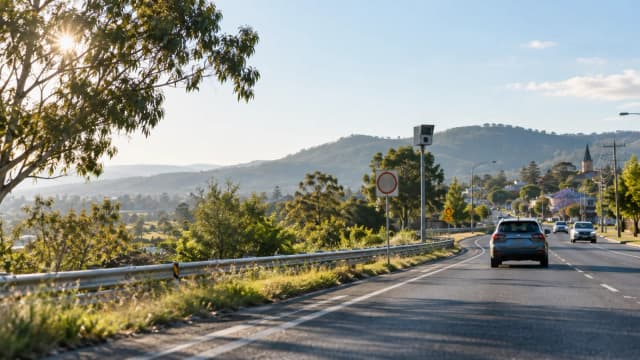
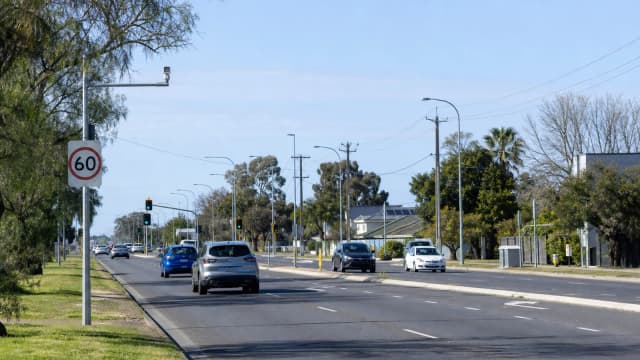
A speeding offence can be detected by a fixed speed camera, mobile speed camera, red-light speed camera, average speed camera or police enforcement. The fine amount usually depends on the offence band, not whether a camera or a police officer detected it. However, camera offences have extra administration steps because the notice is usually sent to the registered operator first.
If you receive a camera-detected notice and you were not driving, the usual process is to nominate the responsible driver by the due date. Do not simply pay a demerit point offence if the notice was issued to you but another person was driving. Once a nomination is accepted, the notice is generally reissued to the nominated person, who then has their own options.
Company vehicles can be more complicated. Several jurisdictions impose large corporate penalties when a business does not nominate the driver responsible for a camera-detected offence. South Australia, for example, lists a body corporate fee where a company vehicle is involved in a red-light or speeding offence and the driver is not nominated. Victoria also has substantial penalties for companies that repeatedly fail to nominate drivers.
- Check the offence date and time
- Check the location and speed limit
- Check the alleged speed
- Check whether it was a school zone
- Nominate the driver if required
- Keep a copy of any nomination or review request
Paying, reviewing or going to court
Most infringement notices give you several choices: pay, nominate another driver if applicable, request a review, or elect to have the matter heard in court. The exact options and time limits depend on the state or territory. Paying usually finalises the notice and may result in demerit points being recorded, so read the notice carefully before deciding what to do.
A review is not the same as a guarantee of withdrawal. Review bodies usually consider limited grounds, such as special circumstances, incorrect details, emergency situations or a clear error. Some jurisdictions may allow leniency for lower-risk speeding where a driver has a long clear record, but serious speeding, school zone speeding and repeat offences are much less likely to be withdrawn.
Court can expose you to different outcomes, including higher maximum fines, court costs, conviction, disqualification or other orders. If you are considering court, if your licence is at risk, or if you drive for work, get independent legal advice. This article is general road-safety information only and is not legal advice.
- Pay the fine
- Nominate the driver
- Request a review
- Ask for a payment arrangement where available
- Elect court, after getting advice if needed
How to reduce the risk of another fine
The safest way to avoid a speeding fine is to build habits that keep your speed below the posted limit without last-second braking. Leave earlier, use cruise control where suitable, watch for speed limit changes, and slow before school zones, roadworks, shopping strips and downhill sections. Remember that posted limits are maximums, not targets, and poor weather or heavy traffic may require a lower speed.
Do not rely on a tolerance. Enforcement thresholds are not something drivers should try to calculate, and a vehicle speedometer, tyre size, gradient or moment of inattention can make a small margin disappear quickly. The practical rule is simple: drive at or below the limit and give yourself enough time that you are not pressured to speed.
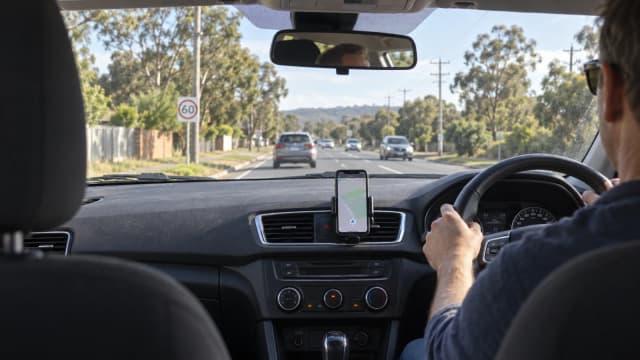
If you use the Speed Camera Radar Detector app, set up any alerts before you drive and treat them only as a planning reminder, not as guaranteed coverage or permission to handle a phone while driving. Radar detectors and jammers are illegal or restricted in many Australian jurisdictions, and mobile phone rules are strict, so keep your focus on the road and the posted speed limit.
- Plan more travel time
- Watch for changed speed zones
- Slow early for school zones
- Use cruise control only where safe
- Do not handle your phone while driving
- Check your notice before taking action
A simple pre-drive checklist
- Set the route and alerts before moving.
- Check the first posted limit after every major turn.
- Leave enough space to adjust without abrupt braking.
- Use official sources when a rule affects your licence.