Speeding fines NSW drivers usually ask about start at $149 and 1 demerit point for a full licence holder in a class A vehicle, such as a vehicle or vehicle and trailer combination not over 4.5 tonnes, when the offence is 10 km/h and under the limit. The fine rises with the speed range, learner and provisional drivers receive at least 4 demerit points for any speeding offence, and school zones or double demerit periods can make the points much higher.
This guide presents general information. Check current official road rules and follow every posted sign.
Speeding fines NSW: amounts for class A vehicles
The NSW Government penalty list currently available for speeding offences is marked as at 1 July 2025. It is a guide and penalties can change, so the amount on an actual penalty notice is the figure to treat as authoritative. For ordinary class A speeding offences outside a school zone, the listed penalties are straightforward by speed band.
For a full licence holder, the lowest class A offence is exceeding the speed limit by 10 km/h and under. That carries a $149 fine and 1 demerit point. More than 10 km/h over the limit is $345 and 3 points. More than 20 km/h over is $592 and 4 points. More than 30 km/h over is $1,133 and 5 points. More than 45 km/h over is $3,054 and 6 points.
A class A motor vehicle is not just a small car label. Under the NSW regulation, it includes a motor vehicle with a gross vehicle mass not exceeding 4.5 tonnes, or a motor vehicle and trailer combination with a gross combination mass not exceeding 4.5 tonnes. Heavier vehicles can fall into class B or class C categories, where fines and points can differ.
- 10 km/h and under: $149, 1 point on a full licence
- Over 10 km/h: $345, 3 points on a full licence
- Over 20 km/h: $592, 4 points
- Over 30 km/h: $1,133, 5 points
- Over 45 km/h: $3,054, 6 points
Learner and provisional drivers
Learner, P1 and P2 drivers face a sharper demerit point impact than unrestricted licence holders. NSW Government guidance says a learner or provisional licence holder who commits any speeding offence receives at least 4 demerit points. That matters because learner and P1 drivers have a 4 point limit, and P2 drivers have a 7 point limit.
For class A vehicles, the listed fine amount for the lower bands is the same as the full licence amount, but the points are different. A learner or provisional driver detected at 10 km/h and under the limit receives 4 points, not 1. A learner or provisional driver detected at more than 10 km/h over the limit receives 4 points, not 3. At higher ranges, the listed points are 4, 5 or 6, depending on the speed band.
NSW Government guidance also says learners and P1 drivers will have their licence suspended or refused for at least 3 months for any speeding offence. P2 drivers can also face suspension, and if they are caught speeding 30 km/h or more over the limit they must remain on their P2 licence for an extra 6 months.
- Learner limit: 4 points
- P1 limit: 4 points
- P2 limit: 7 points
- Unrestricted licence limit: 13 points
- Professional driver limit: 14 points
School zones and double demerits
Speeding in an operating NSW school zone carries increased fines and demerit points. For class A vehicles in a school zone, 10 km/h and under is listed at $246 and 2 points for a full licence holder, or 5 points for a learner or provisional driver. More than 10 km/h over is $443 and 4 points for a full licence holder, or 5 points for a learner or provisional driver.
The higher school zone bands are also heavier than the ordinary class A amounts. More than 20 km/h over in a school zone is $738 and 5 points. More than 30 km/h over is $1,429 and 6 points. More than 45 km/h over is $3,242 and 7 points.
Double demerits apply to speeding offences during specified holiday periods. The fine itself is not doubled, but the demerit points can be. NSW Government guidance also warns that double demerits can apply in school zones during holiday periods if the school zone is operating, which can produce a licence-ending number of points very quickly.
- School zone 10 km/h and under: $246, 2 points on a full licence
- School zone over 10 km/h: $443, 4 points on a full licence
- School zone over 20 km/h: $738, 5 points
- School zone over 30 km/h: $1,429, 6 points
- School zone over 45 km/h: $3,242, 7 points
Speed cameras in NSW
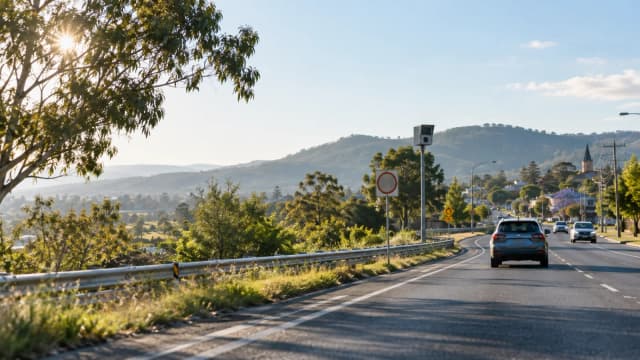
Speed cameras NSW drivers may encounter include fixed speed cameras, mobile speed cameras, red-light speed cameras and average speed cameras. NSW Government guidance says speeding can also be detected by police. A camera offence image will generally record details such as the vehicle, number plate, time, date, location, direction of travel, detected speed and the road speed limit.
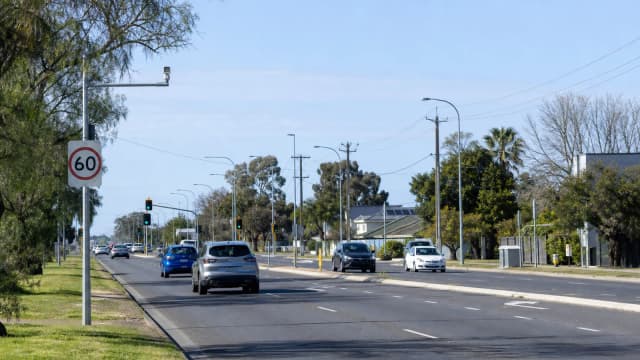
Fixed speed cameras are used at high-risk locations, including tunnels, school zones and places with a history of severe crashes. Mobile speed cameras are moved around the road network. Red-light speed cameras operate at high-risk intersections and can detect both speeding and red-light offences. If a driver is detected both speeding and running a red light, NSW guidance says two penalty notices can be issued and points recorded for both offences.
Average speed cameras measure travel time between two points. NSW has long used average speed enforcement for heavy vehicles, and official NSW information also refers to a light vehicle trial in regional NSW from 2025. The penalty notice depends on the vehicle class and speed band, so the amount may not be identical for every driver.
Speed camera tolerance NSW: what is publicly known
There is no public NSW figure that drivers should treat as a safe speed camera tolerance. In a NSW Parliament answer about mobile speed camera settings, Transport for NSW said it does not comment on settings used to detect offences for speed detection devices in the interest of public safety. It also said motorists are required to adhere to the signposted speed limit and that travelling at or below the signposted limit will not be detected by a speed camera.
That means rumours about a fixed number of kilometres per hour, or a percentage over the limit, should not be relied on. Speedometers, tyres, gradients and GPS readings can all differ, but none of that changes the legal limit shown on the road. The practical rule is simple: drive at or below the posted limit, and drive slower when conditions make the posted limit unsafe.
Transport for NSW says mobile and fixed speed cameras undergo regular testing to meet legal requirements. Red-light speed camera systems are also subject to evaluation, testing and inspections. Accuracy procedures do not create a publicly available allowance that drivers can use as a margin.
What to check on a penalty notice
A NSW speeding penalty notice should be read carefully because the vehicle class, speed band, school zone status and driver licence type can all affect the result. Demerit points are generally added after the fine is paid, after an unpaid fine is enforced, or after a court conviction. Points may not appear immediately.
If someone else was driving, NSW has a nomination process for camera detected offences. If a driver disputes a fine, there are review and court options, but the best step depends on the facts and this page is general information only, not legal advice. For personalised advice, drivers should use an appropriate legal or government service.
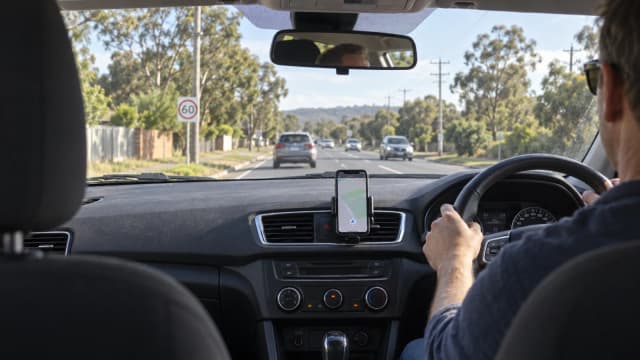
For everyday planning, build speed awareness into the trip before leaving. If using the Speed Camera Radar Detector app, set alerts before you drive and keep the phone out of your hands while driving. No app can guarantee every camera, vehicle or road change, so posted signs and safe driving remain the priority.
- Check the alleged speed and speed limit
- Check whether it was a school zone
- Check the vehicle class
- Check the licence type and demerit point impact
- Check whether double demerits applied
A simple pre-drive checklist
- Set the route and alerts before moving.
- Check the first posted limit after every major turn.
- Leave enough space to adjust without abrupt braking.
- Use official sources when a rule affects your licence.