For most car and motorcycle drivers, speeding fines WA currently start at A$100 for driving not more than 9 km/h over the limit and rise to A$1,200 plus 7 demerit points for more than 40 km/h over the limit. Speeding fines in Western Australia are based on how far over the posted limit you were, with higher demerit point consequences during double demerit periods.
This guide presents general information. Check current official road rules and follow every posted sign.
Speeding fines WA: amounts and demerit points
For cars, motorcycles and other vehicles under 22,500 kg Gross Combination Mass, Western Australia uses penalty units to set many speeding fines. One penalty unit is currently A$50, so the published penalty unit amounts convert into the dollar amounts below. These figures are for the standard speeding infringement bands and may be reviewed from time to time.
If you exceed the speed limit by not more than 9 km/h, the modified penalty is 2 penalty units, or A$100, with 0 demerit points. More than 9 km/h but not more than 19 km/h is 4 penalty units, or A$200, with 2 points. More than 19 km/h but not more than 29 km/h is 8 penalty units, or A$400, with 3 points. More than 29 km/h but not more than 40 km/h is 16 penalty units, or A$800, with 6 points. More than 40 km/h is 24 penalty units, or A$1,200, with 7 points.
Drivers of heavy vehicles can face higher modified penalties for the same speeding bands, so truck and combination drivers should check the rules that apply to their vehicle class rather than relying on the light vehicle figures.
- Up to 9 km/h over: A$100, 0 points
- More than 9-19 km/h over: A$200, 2 points
- More than 19-29 km/h over: A$400, 3 points
- More than 29-40 km/h over: A$800, 6 points
- More than 40 km/h over: A$1,200, 7 points
How double demerits affect speeding fines in Western Australia
Double demerits do not double the cash fine. They double the demerit points for selected offences, including speeding, during announced holiday and long weekend periods. That means a 2 point speeding offence becomes 4 points, a 3 point offence becomes 6 points, a 6 point offence becomes 12 points, and a 7 point offence becomes 14 points during a relevant double demerit period.
This is particularly important in WA because a single higher range speeding offence during a double demerit period can put many drivers close to, or over, their demerit point limit. The exact double demerit periods are announced by the state and can change, so drivers should treat long weekends and major holiday periods such as Easter and Christmas as times to be extra cautious.
Demerit points are separate from the payment of the fine. Paying an infringement usually finalises the monetary penalty, but points can still be recorded against the licence according to the WA demerit point system.
Speed cameras WA: what they can detect
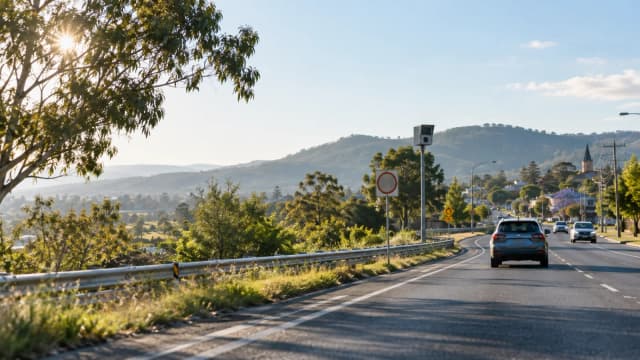
Speed cameras in WA include fixed and mobile speed safety cameras, red-light/speed safety cameras and newer safety cameras that can detect multiple offence types. Western Australia roads are covered by a network of fixed and mobile cameras, and camera locations are selected for road safety reasons such as high risk roads, intersections, school zones, speed related crash history, complaints and locations where a significant share of drivers exceed the limit.
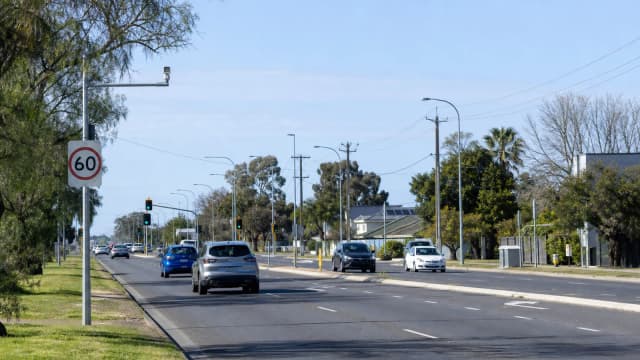
A red-light/speed safety camera can photograph a vehicle that runs a red light and can also detect speeding through the intersection at any phase of the lights. A mobile or fixed speed camera may be operated from a tripod, vehicle, trailer or roadside cabinet. Some safety cameras can detect speeding at the same time as other offences, including mobile phone and seatbelt offences.
Camera devices are subject to testing and calibration requirements. The official information also makes clear that fixed and mobile locations can change without notice, so the safe approach is to drive to the posted limit and the conditions rather than depending on memory of a camera site.
- Fixed speed safety cameras
- Mobile speed cameras
- Red-light/speed safety cameras
- Safety camera trailers and fixed safety cameras
- Average speed detection in designated zones
Infringement notices, nominations and business vehicles
For camera detected speeding, the infringement notice is usually issued first to the registered owner of the vehicle identified in the photograph. If you were the driver named on the notice, the notice sets out payment options and due dates. If you were not the driver, WA Police guidance says not to pay the notice and to follow the nomination process before the due date.
For a business owned vehicle, a Notice Requesting Information may be issued to the company. The responsible person for the business must provide the details of the driver or person in charge of the vehicle by the compliance date. If the required details cannot be provided, the business may be required to pay a higher modified penalty.
If a driver wants a matter dealt with by a court, the process and time limit will be set out on the notice. This article is general road safety information only, not legal advice. If you are unsure about a notice, driver nomination or court election, read the notice carefully and seek appropriate advice before the due date.
Demerit point limits and good behaviour periods
WA drivers can check their demerit point record through the state system if they hold a WA driver’s licence or learner’s permit. The record can show infringement details, point penalties, point expiry dates and demerit point notices. The number of points that triggers action depends on the licence type, and the permissible limit may be 4, 8 or 12 points.
An Excessive Demerit Points Notice is issued when a licence holder reaches or exceeds the relevant point limit within a 3 year period. Eligible full licence holders who have accrued 12 or more points and have been served with an Excessive Demerit Points Notice may be able to elect a 12 month good behaviour period instead of serving the disqualification period.
A good behaviour period is strict. If the driver commits an offence carrying 2 or more demerit points, or another offence that triggers a mandatory disqualification, the driver can be required to serve a disqualification period that is double the original period. For speeding, that means even a mid range camera or police issued infringement can have serious licence consequences for a driver already on a good behaviour period.
Practical ways to avoid a WA speeding fine
The safest way to avoid a speeding fine is to build a habit of checking the speed limit after every turn, merge, school zone sign, roadworks sign and variable speed display. In WA, a speed limit can apply to an area, a school zone, a bridge, a freeway, a pedestrian mall or a vehicle class, so the last sign you saw may not always be the limit that applies to the next part of the road.
Allow extra time on long regional drives, especially where limits change through towns, roadworks, intersections and overtaking lanes. A few kilometres per hour over the limit can still fall into the first fine band, and higher speeds quickly increase both the fine and the demerit point risk. Cruise control or a speed limiter can help on suitable open roads, but the driver remains responsible for matching the limit and the conditions.
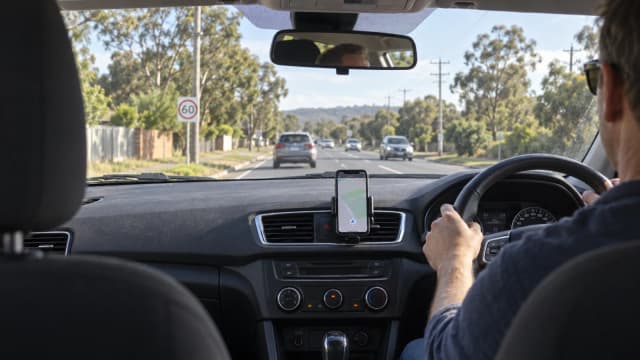
Do not handle a phone while driving to check maps, alerts or camera information. If you use the Speed Camera Radar Detector app, set up alerts before you start driving and treat them only as a planning reminder, not as a guarantee of camera coverage or a substitute for watching the road and speed signs.
WA also has penalties for radar detectors fitted to or on vehicles, whether operational or not. There are separate penalties for devices or behaviour designed to prevent or adversely affect speed camera or detection equipment. The practical takeaway is simple: do not try to defeat enforcement, and focus on legal, safe speed management.
- Leave earlier for long trips
- Recheck limits after turns and roadworks
- Slow early for school zones and town entries
- Use in-car speed aids only when safe
- Never use a phone while driving
A simple pre-drive checklist
- Set the route and alerts before moving.
- Check the first posted limit after every major turn.
- Leave enough space to adjust without abrupt braking.
- Use official sources when a rule affects your licence.