So, do speed cameras flash? Some do, especially older rear-facing fixed cameras, but many modern UK systems use infra-red, video or average speed checks with no obvious visible flash. A flash, or the absence of one, is not a reliable way to know whether a speeding offence has been recorded.
This guide presents general information. Check current official road rules and follow every posted sign.
Do speed cameras flash in the UK?
The short answer is: sometimes. Traditional rear-facing Gatso cameras use radar to measure speed and, when triggered, take two rear photographs with a high-powered flash. That flash is usually most noticeable at night or in poor light, and it may look like a single bright burst or a quick double flash as the evidence images are taken.
Other camera types are deliberately less obvious. Forward-facing cameras must avoid dazzling drivers, so any visible light is filtered and limited. Many digital systems rely on infra-red illumination, automatic number plate recognition, video or paired cameras, which means you may not see anything at all even if the system is working.
The important point for drivers is that enforcement is based on the camera system and the evidence record, not on whether you noticed a flash. If you are driving through a camera site, average speed zone, smart motorway section or mobile enforcement location, assume the posted limit is being enforced.
- Visible flash: common with older rear-facing fixed cameras
- Filtered or low-visible flash: possible with some forward-facing cameras
- No obvious flash: common with average speed and many digital systems
Daytime flashes are easier to miss
In daylight, a camera flash can be hard to notice. Bright sun, wet windscreens, mirrors, following traffic and roadside lighting can all make a flash appear faint or invisible. A driver may also be concentrating on the road ahead and simply not see a rear-facing flash behind the vehicle.
This is why the absence of a visible flash during the day proves very little. A camera may not have been active, may not have been enforcing your lane, may have been triggered by another vehicle, or may use a camera type that does not need a visible flash. Equally, a flash you do notice does not always mean your vehicle was the one recorded.
Some flashes are not connected with speed enforcement at all. Reflections from buses, emergency vehicles, roadworks lamps, motorway signs, headlights on bumps and dashcam exposure changes can all look like a camera flash. The safest approach is not to second-guess the equipment, but to drive to the limit shown by the signs.
Do speed cameras work at night?
Yes, speed cameras can work at night. Older systems use a flash to illuminate the vehicle and number plate. Newer systems may use infra-red illuminators, which can produce evidence images without a white flash that is obvious to the driver. National Highways says its average speed cameras used around roadworks are equipped with infra-red illuminators and can operate 24 hours a day in all weather conditions.
Night enforcement is common because risk does not disappear after dark. Lower traffic levels can tempt drivers to speed, while reduced visibility, pedestrians, cyclists, animals, roadworks and tiredness can make the consequences more serious. Mobile camera vans and police-operated devices can also be used in low light where the equipment and operating conditions allow it.
If you are asking, do speed cameras work at night, the practical answer is to treat them as active whenever they are present. Do not rely on seeing a flash in your mirror, and do not assume a dark camera housing is switched off. The legal limit applies at all times unless a lawful sign changes it.
- Fixed cameras may use visible flash or infra-red
- Average speed cameras can operate at night
- Mobile enforcement may be used after dark
- No flash does not mean no enforcement
Yellow speed cameras and visibility rules
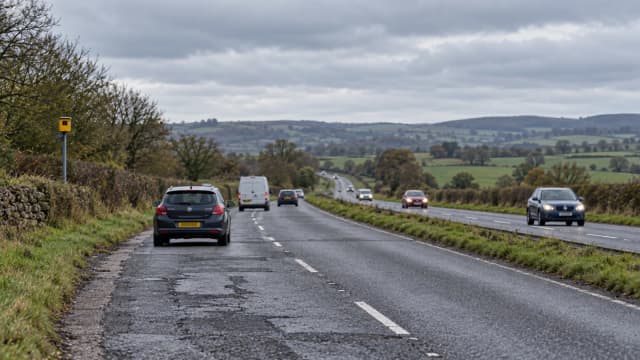
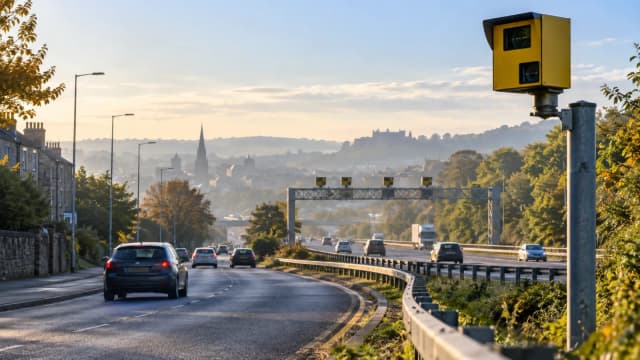
Yellow speed cameras are common because Department for Transport guidance says fixed speed camera housings should be coloured yellow, either with paint or retro-reflective sheeting. The guidance also recommends that fixed cameras, mobile enforcement vehicles and operators should be clearly visible from a driver’s viewpoint, with different visibility distances depending on the speed limit.
This visibility policy is about road safety and deterrence. The idea is that cameras should encourage drivers to slow down and comply with the limit, not act as hidden traps. National Highways also describes its average speed enforcement cameras at roadworks as painted yellow.
However, yellow paint is not the legal test for whether a speeding allegation can be enforced. Department for Transport guidance states that its signing, visibility and conspicuity guidance has no bearing on enforcement, and non-compliance does not provide a defence to an alleged offence. In simple terms, a camera being hard to see is not a reason to speed.
- Yellow fixed housings
- Yellow average speed cameras at many roadworks
- Liveried mobile enforcement vehicles
- Visibility guidance, not a speeding defence
Which camera types usually flash?
Gatso cameras are the classic UK example of a flashing speed camera. They are rear-facing, so the flash is directed at the back of the vehicle rather than into the driver’s eyes. The second photograph and the road markings provide a secondary check of the vehicle’s movement between images.
Truvelo-style cameras are often forward-facing and use road sensors to measure speed. Because they may photograph the front of the vehicle, the lighting has to be controlled to reduce the risk of dazzling drivers. That means a driver may see a coloured or filtered flash, a much less obvious light, or nothing they recognise as a flash.
Average speed cameras work differently. They record a vehicle at two or more points, match the registration, calculate the time taken over a known distance and create an evidence record if the average speed is above the limit. These systems usually do not need a bright visible flash. Mobile vans and hand-held police devices also do not depend on the familiar roadside-camera flash.
- Gatso: usually visible rear flash
- Truvelo: forward-facing, filtered or less obvious illumination
- Average speed: normally no visible flash
- Mobile enforcement: usually no roadside flash
What happens if a camera records you?
If your vehicle is caught by a speed camera, the registered keeper is normally sent a Notice of Intended Prosecution and a Section 172 notice within 14 days. The Section 172 notice asks who was driving, and it must be returned within 28 days. Ignoring it can lead to court action.
The minimum speeding penalty is a £100 fine and 3 penalty points, unless the police offer and you accept a speed awareness course. More serious cases can go to court, where fines can be higher and disqualification is possible. New drivers should be especially careful because 6 or more points within 2 years of passing the test can lead to licence revocation.
Speed camera database alerts can be a useful reminder to check the posted limit before you set off. If you use the Speed Camera Radar Detector app, plan your route and alerts before driving, then leave the phone alone while the vehicle is moving. The law and the Highway Code are clear that using a hand-held phone while driving is not permitted.
- Watch the posted limit, not the camera housing
- Allow for temporary and variable limits
- Do not handle a phone while driving
- Treat unlit cameras as potentially active
A simple pre-drive checklist
- Set the route and alerts before moving.
- Check the first posted limit after every major turn.
- Leave enough space to adjust without abrupt braking.
- Use official sources when a rule affects your licence.