How do average speed cameras work? In the UK, they read a vehicle's number plate at two or more fixed points, record the time at each point, then calculate average speed by dividing the known distance by the travel time. If the calculated speed is above the enforcement threshold for that road and vehicle, the evidence can be reviewed and a speeding process may follow.
This guide presents general information. Check current official road rules and follow every posted sign.
How do average speed cameras work in practice?
Average speed cameras measure a section of road, not the split second at which you pass one camera. The official Home Office description of average speed is a speed calculated by dividing the distance between two datum points by the time measured for a vehicle to travel between them. In plain English, the system needs a known distance and an accurate time difference.
At the first camera, an image detector captures your vehicle and uses automatic number plate recognition, usually called ANPR, to read the registration mark. It records the time and site details. At a later camera, the system looks for the same registration mark, records another time, and matches the two records. The control unit then uses the measured baseline distance between the two points to work out the average speed.
For example, if a vehicle travels 5 miles through a 50 mph average speed zone and takes exactly 6 minutes, the average is 50 mph. If it covers the same distance in 5 minutes, the average is 60 mph. The important point for drivers is that a short burst of speed between cameras can still affect the result, even if the vehicle is below the limit as it passes each camera.
Modern systems can work as a pair of cameras or as a wider network of cameras along a route. The Home Office handbook describes distributed automatic distance/time speedmeters, where pairs of image detectors in a network can act as an average speedmeter, provided the link being enforced is under one common speed limit. That is why you may see several camera poles in a roadworks scheme or along a longer A-road route.
- Number plate read at the first point
- Number plate read again at a later point
- Known distance between camera points
- Time difference between the two readings
- Average speed calculated over that distance
What a SPECS average speed camera is
A SPECS average speed camera is one of the best-known types of average speed camera used on UK roads. Drivers often use the word SPECS to describe any average speed camera, but it is better to treat it as a particular system rather than a generic name for every installation. Police and road safety bodies may also refer to SPECS3 or other average speed camera systems depending on the equipment in use.
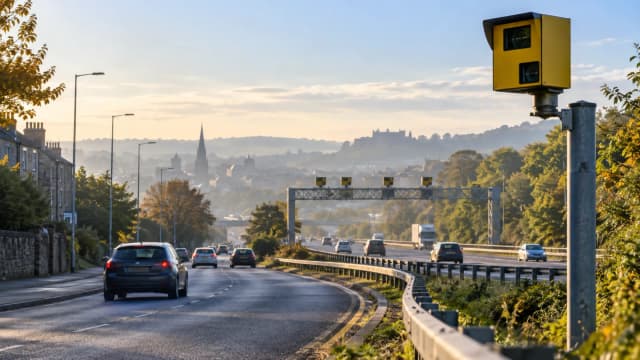
SPECS-style systems are normally highly visible. They are often mounted on gantries, poles or roadside structures and are aimed at the lane or lanes being monitored. The key difference from a traditional fixed spot camera is the method of measurement: the camera at one point is not simply asking whether you were doing a particular speed at that exact location. It is part of a distance/time calculation over a defined section.
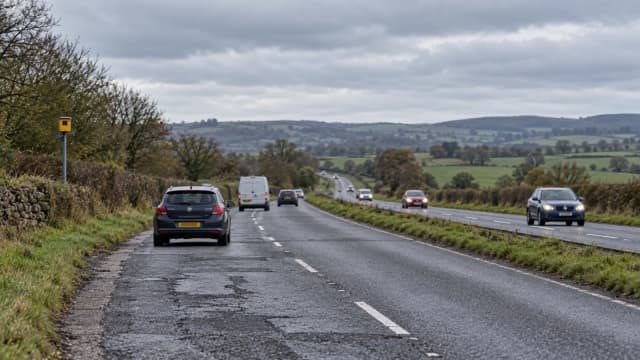
Average speed cameras are common in motorway and major road roadworks because they encourage steadier speeds through narrow lanes, temporary alignments and areas where road workers may be close to live traffic. They are also used as permanent installations on some local roads where authorities and police want to manage speed over a longer hazard, such as a route with junctions, bends, schools, collision history or a history of speeding.
The equipment used for enforcement in Great Britain must meet Home Office type approval requirements where those requirements apply. That process is concerned with whether the device meets the technical and evidential standards for road traffic law enforcement. Drivers do not need to know the brand or model to drive safely through the zone. The practical rule is simpler: identify the posted limit, remember that the check is over a distance, and keep to a safe, legal speed for the whole section.
- SPECS is a recognised average speed system
- Not every average speed camera is necessarily SPECS
- The check is based on distance and time
- The system is designed to encourage steady compliance
Where they are used and what the signs mean
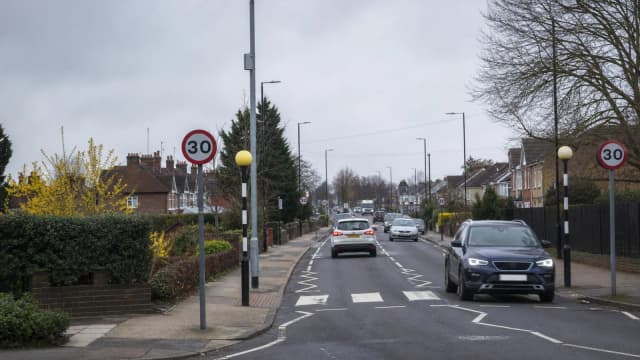
You will most often meet average speed cameras on motorways, dual carriageways, major A-roads, long urban corridors and roadworks. They can also appear on roads with lower limits, including 20 mph, 30 mph and 40 mph sections, where a local safety partnership or police force considers average speed enforcement suitable. Northern Ireland also uses average speed camera systems, with equipment approved by the Department for Infrastructure before enforcement use.
The sign most drivers recognise is the camera symbol with wording such as "Average speed check". Department for Transport traffic sign information describes this as a length of road where two cameras are used to measure the average speed of a vehicle between two points. Speed limit signs still matter. The average speed camera sign tells you about the enforcement method, but the roundel or variable sign tells you the limit.
In roadworks, the temporary speed limit may begin before the first camera and may continue until a later sign changes or ends it. On smart motorways and other managed roads, variable speed limits can change with overhead signals. The safe approach is to obey the limit displayed or signed at the point you are driving, not to assume that the average camera zone always uses the same limit you remember from a previous journey.
A camera sign does not replace the speed limit. It also does not mean every other kind of enforcement is absent. Police officers, mobile camera vans and other approved devices can still be used on the road network. Average speed cameras are only one method of enforcing the legal speed limit.
- Look for the posted speed limit first
- Treat "Average speed check" as a route-based warning
- Expect roadworks limits to continue until signed otherwise
- Do not rely on memory from a previous journey
Limits, lanes and vehicle types
The speed limit that applies to you depends on the road, the posted signs and the type of vehicle you are driving. The Driver and Vehicle Licensing Agency makes clear that you must not drive faster than the speed limit for your road and vehicle type, and that the limit is an absolute maximum rather than a target. Cars and motorcycles may have different national speed limits from many vans, goods vehicles, buses, coaches or vehicles towing trailers.
This matters in average speed zones because the camera is not a permission to travel at the highest number you have seen on the road. If you are driving a van, towing a caravan, driving a motorhome, or using a goods vehicle, check the rules for that vehicle. On national speed limit roads, some vehicles have lower limits than cars. Where a lower signed local limit applies, such as 40 mph through roadworks, that signed limit usually controls the section for all traffic unless signs say otherwise.
Drivers sometimes ask whether changing lanes prevents average speed cameras from working. You should not assume that it does. Modern average speed systems can be configured across lanes and networks, and the Home Office handbook describes arrangements for image detectors, baseline tables and matching records. The only safe and lawful approach is to keep within the applicable limit, whatever lane you use.
Another common misunderstanding is that braking sharply at each camera is enough. That behaviour misses the point of average speed enforcement and can increase risk for traffic behind. If you drive well above the limit between cameras, your calculated average can still be too high. A smooth, steady speed is safer, less stressful and more consistent with why these systems are installed.
Average speed cameras also do not make poor conditions safe. Fog, heavy rain, standing water, darkness, congestion and vulnerable road users may all require a speed below the posted limit. The legal limit is a ceiling, not a promise that the road is safe at that speed.
- Vehicle type can change the applicable limit
- National speed limit is not the same for every vehicle
- Changing lanes is not a reliable way to avoid detection
- Sharp braking can be dangerous and does not address the average
What happens after a camera records speeding
If a camera records an alleged speeding offence, the process normally moves from roadside equipment to back-office review. The Home Office handbook refers to a back-office facility where information from the roadside detector is received, decrypted and processed. In practice, the evidence is checked before the registered keeper is contacted.
For speed camera cases, the Driver and Vehicle Licensing Agency says that within 14 days of a car being caught speeding you will be sent a Notice of Intended Prosecution and a Section 172 notice. The Section 172 notice asks who was driving, and it must be returned within 28 days. Ignoring the notice can lead to court action, so it is important to deal with it promptly and honestly.
The minimum speeding penalty is currently a £100 fine and 3 penalty points. Depending on the speed, the circumstances and local police decisions, an eligible driver may be offered a speed awareness course instead of points and a fixed penalty. More serious cases, disputed cases or ignored notices may go to court, where fines and outcomes can be higher. The maximum fine is higher for motorway offences than for many other roads.
This page is educational only and is not legal advice. If you receive paperwork, read it carefully and follow the instructions on it. If there is an error in your details, if you were not the driver, or if you believe there is a genuine legal issue, you may need independent advice from a qualified professional.
- Notice of Intended Prosecution
- Section 172 driver identification notice
- Possible fixed penalty
- Possible speed awareness course where offered
- Possible court process for some cases
Safe driving through an average speed zone
The simplest way to drive through an average speed zone is to settle early into a steady speed at or below the correct limit. Avoid last-second braking, close following and repeated acceleration. Leave enough space so that if the driver in front reacts suddenly to a camera, a cone layout or a lane change, you still have time to respond calmly.
Use your vehicle's speedometer and any built-in speed limiter or cruise control only when conditions make it safe to do so. Cruise control is not suitable for every situation, especially in heavy traffic, wet conditions or roadworks with frequent speed changes. The driver remains responsible for observing signs, checking the limit and adapting to hazards.
Navigation and camera-alert tools can help with planning, but they are not a substitute for signs or attention. If you use the Speed Camera Radar Detector app, set up alerts before you start driving and never handle your phone while driving. No app can guarantee complete coverage or replace your own observation of the road.
Average speed cameras are meant to make speeds more consistent across a whole risk area. Treat them as a reminder to drive smoothly and legally, not as a puzzle to beat. In most journeys, keeping a steady legal speed through the zone costs little or no meaningful time and greatly reduces the risk of a fine, points, sudden braking or a collision.
- Settle into the limit early
- Keep a safe following distance
- Check signs when the limit changes
- Do not handle a phone while driving
- Drive below the limit when conditions demand it
A simple pre-drive checklist
- Set the route and alerts before moving.
- Check the first posted limit after every major turn.
- Leave enough space to adjust without abrupt braking.
- Use official sources when a rule affects your licence.