A speed camera map UK drivers can rely on is a planning tool, not a promise that every enforcement site is shown or active. The short answer is that fixed cameras and many average speed zones can often be mapped in advance, while mobile camera vans and police roadside checks vary by force area, day and operational need.
This guide presents general information. Check current official road rules and follow every posted sign.
What a UK camera map can and cannot show
The UK does not have one single, live, official public map that covers every fixed, average and mobile speed camera in England, Scotland, Wales and Northern Ireland. Enforcement is run through police forces, safety camera partnerships and road authorities, so public information is fragmented. Some areas publish detailed camera site lists, some publish mobile enforcement locations, and some publish only general safety information.
A good map should therefore be treated as a layered guide. It may show known fixed camera housings, average speed corridors, red light cameras with speed enforcement where relevant, and previously published mobile sites. It should not be read as confirmation that a camera is switched on, that a mobile van will be present, or that an unlisted road will not be enforced.
This matters because speed enforcement is not limited to famous yellow roadside boxes. Police can stop drivers directly, mobile vans can operate at authorised or risk-assessed locations, and temporary roadworks may use average speed systems. The safest assumption is simple: drive to the posted limit, then use mapping and alerts as a reminder, not as the reason to slow down.
How to use a speed camera map UK drivers can trust
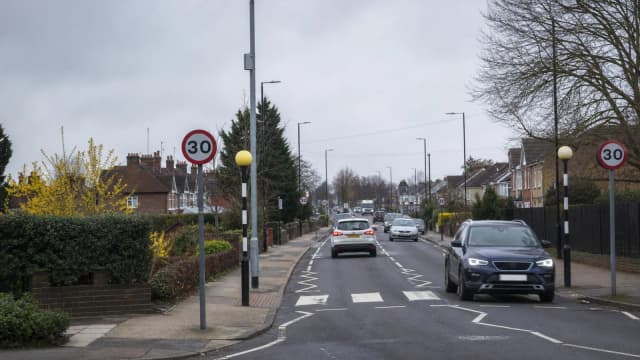
Use a speed camera map UK journey check before you set off, especially on unfamiliar routes, long motorway drives and cross-border trips. Look for the road name, direction of travel, camera type and the speed limit shown by road signs. A map is most useful when it helps you anticipate changes from 70 mph to 50 mph at roadworks, from 40 mph to 30 mph on urban approaches, or into 20 mph streets near schools and neighbourhood centres.
For a local check, many drivers search for speed cameras near me. That can be useful, but the result may mix official sites, community reports and outdated entries. Give more weight to current police or safety partnership information where available, and be cautious with any map that does not explain its data source or update process.
When reading any camera map, separate three questions: is there camera infrastructure, is enforcement possible, and what is the legal speed limit today? A camera symbol may answer only the first question. Temporary limits, roadworks layouts, variable motorway signs and newly introduced local speed limits can change what applies on the road.
- Check before leaving
- Confirm with road signs
- Expect local variation
- Do not assume unlisted roads are unenforced
Fixed cameras, red light cameras and signed sites
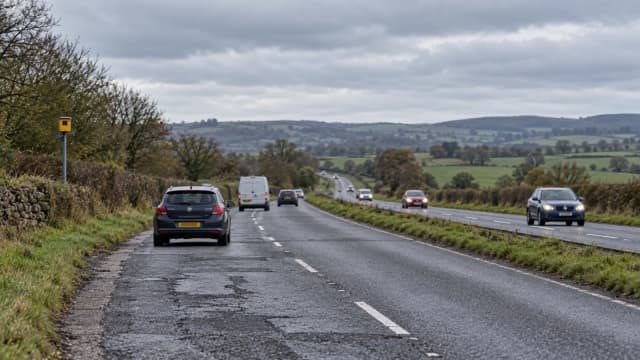
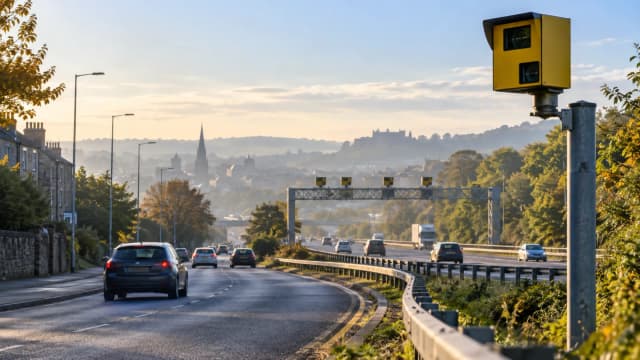
Fixed speed cameras are permanent or semi-permanent enforcement points aimed at a specific stretch of road. They may be found on urban A-roads, dual carriageways, approaches to junctions, roads with collision histories and routes where speed compliance has been a problem. Some older housings may no longer be active, while some newer digital systems may be less familiar to drivers than traditional box-style cameras.
Red light cameras are designed for signal offences, but some sites can also enforce speed. If a map marks a camera near traffic lights, do not assume it is speed-only or red-light-only unless the data clearly says so. Your practical duty is unchanged: obey the signal, stop safely when required, and keep within the speed limit.
Speed camera warning signs are common, and Department for Transport guidance has long encouraged conspicuous signing and visibility as best practice. However, police guidance also makes clear that there is not a separate legal requirement for every fixed or mobile camera to have a warning sign in a particular position. In other words, the absence of a sign is not a reliable defence and not a reason to relax your speed checks.
Average speed camera zones
Average speed cameras work differently from single-point cameras. Instead of measuring only the speed at one spot, they compare a vehicle's passage between camera points over a known distance. National Highways explains that average speed enforcement around roadworks uses camera records, time stamps and number plate recognition data to create an evidence record if the calculated average exceeds the legal limit.
These zones are common in roadworks, on managed roads and on longer stretches where steady compliance is preferred to last-second braking. They can apply across several miles, and the relevant limit may be 50 mph, 40 mph or another posted value depending on the scheme. The important point is that slowing briefly for a camera and speeding up between gantries is not how these systems are designed to work.
On a map, an average speed zone should ideally be shown as a section or corridor, not only as individual camera pins. When planning, note where the zone begins and ends, but rely on the roadside signs for the enforceable limit and any lane-specific instructions.
- Used on longer sections
- Common at roadworks
- Based on time and distance
- Requires steady compliance
Mobile speed camera sites and police checks
Mobile enforcement is the hardest category for any map to represent. Some police forces and partnerships publish lists of mobile sites or weekly areas, but others provide less detail. Even where a list is published, it may be indicative rather than a timetable. Vans can be moved, checks can be cancelled, and officers may enforce elsewhere if circumstances justify it.
In Northern Ireland, for example, the Police Service of Northern Ireland explains that safety camera vehicles operate across authorised sites and that deployment can take place anywhere in Northern Ireland. Other UK forces publish local site lists, including roads and speed limits, but those lists do not mean enforcement happens only at the exact time a driver expects.
A mobile site layer is still useful for journey planning. It highlights roads where speed complaints, collision history or road layout may have led to enforcement. Treat it as a safety prompt: check your speed earlier, leave more following distance, and avoid harsh braking when you notice a van or roadside officer.
Choosing a speed camera app UK drivers can use safely
A speed camera app UK drivers choose should do three things well: show fixed and average camera information clearly, update data regularly, and minimise distraction. The app should support planning before departure, voice alerts where appropriate, and a layout that does not require repeated tapping while moving. A speed camera app is most helpful when it reduces surprises without pulling attention away from the road.
UK law on phone use is strict. It is illegal to hold and use a phone, sat nav, tablet or other data-capable device while driving or riding. If you use any navigation or camera alert app, set it up before moving off, secure the device properly and do not interact with it while driving. If you need to change settings, stop somewhere safe and legal first.
If you use the Speed Camera Radar Detector app, set the route and alerts before driving, then leave the phone mounted or stowed. No app can guarantee full coverage of every fixed, average or mobile site, and none replaces the speedometer, road signs, weather judgement or safe following distance.
- Plan alerts before driving
- Use audio prompts where helpful
- Keep the screen glanceable
- Never hold the phone while driving
What happens if a camera records speeding
If a vehicle is recorded speeding, the usual process begins with a Notice of Intended Prosecution and a Section 172 notice asking for driver details. The registered keeper must respond within the stated time. Depending on the circumstances, the outcome may be a fixed penalty, a speed awareness course offer, or a court process.
The standard fixed penalty for speeding is £100 and 3 penalty points, unless a course is offered and accepted. If the matter goes to court, fines can be higher and depend on the offence and the driver's circumstances, with higher maximums applying on motorways.
The practical lesson for map users is that camera awareness should support smoother, calmer driving. Check the route, know where enforcement is common, but make the posted limit your baseline everywhere, including roads with no camera marker at all.
A simple pre-drive checklist
- Set the route and alerts before moving.
- Check the first posted limit after every major turn.
- Leave enough space to adjust without abrupt braking.
- Use official sources when a rule affects your licence.