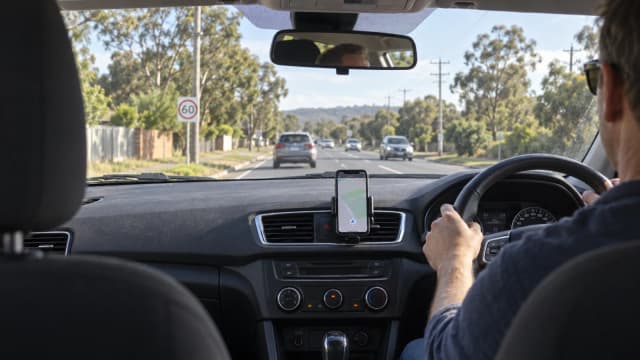
So, are radar detectors legal in the United States? For private passenger vehicles, the general answer is yes in 49 states, but not in Virginia, not in the District of Columbia, not in regulated commercial motor vehicles, and not on Department of Defense installations.
This guide presents general information. Check current official road rules and follow every posted sign.
Are radar detectors legal in the United States?
A radar detector is a receiving device that listens for police speed-measuring radar signals. In most states, a driver of a private car may own and use one, but that does not mean every device, every mounting method, or every vehicle type is allowed everywhere.
The main nationwide exception is for commercial motor vehicles covered by federal motor carrier rules. Federal rules prohibit a driver from using a radar detector in a commercial motor vehicle or operating a commercial motor vehicle that is equipped with or contains one. Motor carriers also may not require or permit drivers to violate that rule.
The other big exception is military property. Department of Defense traffic safety rules prohibit radar or laser detection devices on installations. Once you enter a base, fort, post, air station, naval station or other DoD installation, the local installation rules matter even if the surrounding state allows detectors in ordinary private cars.
- Private passenger cars: usually legal outside Virginia and D.C
- Commercial motor vehicles: prohibited under federal motor carrier rules
- DoD installations: prohibited on base
- Radar jammers: different from detectors and federally prohibited
State-by-state quick guide
This guide is written for ordinary private passenger vehicles, not regulated commercial vehicles. “Legal” means no statewide ban on radar detectors for private cars was identified; local rules, federal property rules, rental or employer policies, windshield-obstruction rules and distracted-driving laws can still apply.
D.C. is included because many drivers cross between Maryland, Virginia and the District on the same trip. It is not a state, but it is one of the most important places in the country for radar detector legality.
- Alabama — Legal in private passenger vehicles
- Alaska — Legal in private passenger vehicles
- Arizona — Legal in private passenger vehicles
- Arkansas — Legal in private passenger vehicles
- California — Legal in private passenger vehicles, but mounting and windshield visibility rules still matter
- Colorado — Legal in private passenger vehicles
- Connecticut — Legal in private passenger vehicles
- Delaware — Legal in private passenger vehicles
- Florida — Legal in private passenger vehicles
- Georgia — Legal in private passenger vehicles
- Hawaii — Legal in private passenger vehicles
- Idaho — Legal in private passenger vehicles
- Illinois — Legal in private passenger vehicles
- Indiana — Legal in private passenger vehicles
- Iowa — Legal in private passenger vehicles
- Kansas — Legal in private passenger vehicles
- Kentucky — Legal in private passenger vehicles
- Louisiana — Legal in private passenger vehicles
- Maine — Legal in private passenger vehicles
- Maryland — Legal in private passenger vehicles
- Massachusetts — Legal in private passenger vehicles
- Michigan — Legal in private passenger vehicles
- Minnesota — Legal in private passenger vehicles, but mounting rules should be checked before placing anything on the windshield
- Mississippi — Legal in private passenger vehicles
- Missouri — Legal in private passenger vehicles
- Montana — Legal in private passenger vehicles
- Nebraska — Legal in private passenger vehicles
- Nevada — Legal in private passenger vehicles
- New Hampshire — Legal in private passenger vehicles
- New Jersey — Legal in private passenger vehicles
- New Mexico — Legal in private passenger vehicles
- New York — Legal in private passenger vehicles
- North Carolina — Legal in private passenger vehicles
- North Dakota — Legal in private passenger vehicles
- Ohio — Legal in private passenger vehicles
- Oklahoma — Legal in private passenger vehicles
- Oregon — Legal in private passenger vehicles
- Pennsylvania — Legal in private passenger vehicles
- Rhode Island — Legal in private passenger vehicles
- South Carolina — Legal in private passenger vehicles
- South Dakota — Legal in private passenger vehicles
- Tennessee — Legal in private passenger vehicles
- Texas — Legal in private passenger vehicles
- Utah — Legal in private passenger vehicles
- Vermont — Legal in private passenger vehicles
- Virginia — Illegal in motor vehicles on Virginia highways, with limited statutory exceptions
- Washington — Legal in private passenger vehicles
- West Virginia — Legal in private passenger vehicles
- Wisconsin — Legal in private passenger vehicles
- Wyoming — Legal in private passenger vehicles
- District of Columbia — Illegal to use or possess in an automobile
Virginia, D.C. and border trips
If you are asking, “are radar detectors legal in Virginia,” the answer is no for a vehicle operating on Virginia highways. Virginia law makes it unlawful to operate a motor vehicle on Commonwealth highways when the vehicle is equipped with a device, passive or active, that detects or interferes with speed-measuring radar, laser or similar law-enforcement equipment.
Virginia’s law also treats the presence of a prohibited device in or on a motor vehicle on the highway as evidence of a violation. The statute has a narrow exception when the device has no power source and is not readily accessible for use by the driver or any passenger. Virginia also says no demerit points are awarded for a violation of this section, but that does not make the device lawful.
D.C. is also restrictive. District regulations prohibit selling, using or possessing in an automobile a device used to detect or counteract police radar, with an exception for vehicles and equipment used by the U.S. Armed Forces. Because the D.C., Maryland and Virginia region has many short border crossings, drivers should think about the strictest part of the trip before they start driving.
A practical example: a radar detector that is lawful in a private car in Maryland becomes a problem if that same car enters Virginia with the device accessible and powered, or enters D.C. with the device in the automobile. Do not assume that a device is lawful for the whole route just because it is lawful where the trip begins.
- Virginia: statewide highway ban
- D.C.: possession or use in an automobile prohibited
- Maryland: legal for private passenger vehicles
- Border routes: check the rules before the trip begins
Commercial vehicles, company vehicles and military bases
Radar detector rules are stricter for commercial driving than for ordinary personal driving. Under federal motor carrier regulations, a driver may not use a radar detector in a commercial motor vehicle and may not operate a commercial motor vehicle that is equipped with or contains one. That rule can matter even in states where detectors are otherwise legal for private cars.
Do not treat “company vehicle” and “commercial motor vehicle” as the same phrase in casual conversation. A small employer-owned sedan may be treated differently from a regulated truck or bus, but employers can still ban radar detectors by policy. If you drive for work, the safest assumption is that federal rules, state rules, company policy and insurance requirements all need to be checked before any device is installed or carried.
Military installations are another separate category. DoD traffic safety policy prohibits radar or laser detection devices that detect speed-recording instruments or transmit simulated erroneous speeds on installations. A detector that is legal on the public road outside the gate may still violate base rules once you enter.
Rental cars and borrowed vehicles create another common problem. If a detector is left in the vehicle, the driver may be responsible for where that vehicle is operated. Before crossing into Virginia, D.C., a military installation or a regulated commercial setting, remove uncertainty before the vehicle moves.
- Federal commercial motor vehicle rule
- Employer and fleet policies
- Military installation rules
- Rental and borrowed-car responsibility
Radar detectors, jammers and apps are not the same thing
A radar detector listens for radar. A radar jammer tries to interfere with speed-measuring equipment. A laser jammer targets lidar rather than radio radar. These categories are not treated the same way, and drivers should not assume that a legal detector makes any interference device legal.
Federal information from the U.S. government warns that jamming equipment that interferes with authorized radio communications is prohibited, including equipment affecting police radar, GPS, cellular and other communications. Jammers can also create public-safety risks, so this article does not cover how to use or configure them.
A radar detector app is different again. Many apps use GPS, map databases or community reports rather than a hardware receiver that detects police radar. A phone app that only displays camera or hazard alerts is not the same as a windshield-mounted radar detector, but normal phone-use and distracted-driving laws still apply. Set alerts before driving, use hands-free settings where lawful and do not handle a phone behind the wheel.
The Speed Camera Radar Detector app can be used as a planning aid for fixed, mobile, red light and average-speed camera alerts before a trip, but no app or device guarantees complete coverage or changes the duty to drive at a safe legal speed.
- Detector: receives radar signals
- Jammer: attempts to interfere
- App: usually GPS or database based
- Phone use: still governed by distracted-driving laws
Mounting, visibility and safe-use rules
Even where a radar detector is legal, how it is installed can create a separate issue. Many states regulate objects attached to the windshield, dashboard or mirror area if they obstruct the driver’s view. A detector, phone mount, dash cam or toll transponder can become a problem if it blocks visibility or violates a state’s equipment rules.
That is why a state can appear “legal” in the detector column but still require careful placement. The legal question is not only whether the detector is allowed; it is also whether the installation is secure, whether cords interfere with vehicle controls, whether the display distracts the driver and whether the windshield remains clear.
Drivers should also remember that a detector does not detect every enforcement method. It may not warn about pacing, aircraft observation, visual estimation, some automated camera systems, red light cameras, stop-sign cameras, average-speed zones or officer enforcement using methods outside the detector’s capability. The safest use of any alerting technology is as a reminder to check speed and drive calmly, not as a reason to speed.
- Keep the windshield clear
- Secure cords and mounts
- Avoid visual distractions
- Do not handle devices while driving
Bottom line for drivers
For a private passenger car, radar detectors are generally legal in every state except Virginia. They are also illegal in the District of Columbia, prohibited in regulated commercial motor vehicles under federal rules, and prohibited on DoD installations. Those exceptions are important enough that drivers should plan ahead before crossing borders or entering restricted property.
If your route includes Virginia, D.C., a military base or commercial driving, do not rely on a general “legal in my state” answer. The rule that matters is the rule where the vehicle is being operated, and in some places the presence of the device in the vehicle is enough to create legal risk.
Finally, separate detectors from jammers and apps. A lawful radar detector does not make a jammer lawful, and an app does not remove the need to obey speed limits, road signs, school zones, work zones and officer directions.
A simple pre-drive checklist
- Set the route and alerts before moving.
- Check the first posted limit after every major turn.
- Leave enough space to adjust without abrupt braking.
- Use official sources when a rule affects your licence.