So, are radar detectors legal in Texas? Yes, for most drivers in private passenger vehicles, Texas does not ban owning or using a passive radar detector. The important exceptions are commercial motor vehicles under federal rules, devices that interfere with police radar or laser, and any mounting setup that blocks the driver’s clear view.
This guide presents general information. Check current official road rules and follow every posted sign.
Are radar detectors legal in Texas for everyday drivers?
For a regular driver in a personal car, pickup, SUV or motorcycle, a passive radar detector is generally legal in Texas. A passive detector listens for radar or laser signals used by law enforcement speed-measurement equipment. It does not transmit a signal, change a speed reading or interfere with an officer’s equipment.
Texas law is more specific about what is not allowed. The Texas Transportation Code prohibits “radar interference devices,” which are devices intended to interfere with, scramble, disrupt or otherwise cause a radar or laser speed-measurement device to malfunction. That is different from a standard detector that only receives signals.
This distinction matters because many drivers use the terms detector, laser detector, jammer and diffuser loosely. In Texas, a detector is treated differently from a device designed to defeat enforcement equipment. If a product claims to jam, scramble, diffuse or block police radar or laser, it belongs in a different legal category from a passive dashboard detector.
- Passive radar detector: generally legal in a private vehicle
- Radar or laser jammer: prohibited under Texas law
- Commercial motor vehicle: subject to federal restrictions
- Unsafe windshield placement: can create a separate equipment issue
Commercial vehicles are different
The biggest practical exception is for commercial motor vehicles. Federal Motor Carrier Safety Administration rules say a driver may not use a radar detector in a commercial motor vehicle, and may not operate a commercial motor vehicle that is equipped with or contains a radar detector. Motor carriers also may not require or permit a driver to violate that rule.
That federal rule can matter in Texas even if state law does not generally ban detectors for personal vehicles. It is not limited to a detector being plugged in or actively alerting. The federal rule uses broad wording: use, equipped with or contains. A driver who moves between a personal vehicle and a regulated commercial vehicle should not assume that the same device can stay in both.
If you drive a company truck, bus, delivery vehicle, towing vehicle or any vehicle used in a regulated motor carrier operation, check your employer’s safety policy and the applicable FMCSA rules before carrying a detector. The safest summary is simple: personal-vehicle use is one thing, commercial motor vehicle use is another.
- No detector use in a regulated commercial motor vehicle
- No operating a covered commercial vehicle that contains one
- Employer policies may be stricter than the legal minimum
Detectors are not the same as jammers
Texas draws a clear line around interference. Texas Transportation Code Section 547.616 defines a radar interference device as equipment designed, manufactured, used or intended to be used to interfere with, scramble, disrupt or otherwise cause a law enforcement radar or laser device to malfunction. The statute includes terms such as radar jamming device, jammer, scrambler and diffuser.
The same section says a person, other than a law enforcement officer acting in official duties, may not use, attempt to use, install, operate or attempt to operate a radar interference device in a motor vehicle operated by that person. It also prohibits purchase, sale or offering for sale of such a device for that prohibited use. A violation is listed as a Class C misdemeanor.
This is why drivers should read product descriptions carefully. A legal detector should be a receiving device. If a device transmits, blocks, jams or tries to confuse speed-measurement equipment, it is not just a stronger detector. It may be illegal under Texas law, and radio-frequency jamming can also raise federal enforcement issues when it interferes with authorized communications.
- “Jammer” and “scrambler” are warning terms
- Laser jammers are not the same as laser alerts
- A detector should not interfere with an officer’s reading
Where you mount a detector matters
Even when a radar detector is legal, the way it is mounted can still cause problems. Texas Transportation Code Section 547.613 makes it an offense to operate a motor vehicle with an object or material placed on or attached to the windshield, side window or rear window if it obstructs or reduces the operator’s clear view. A detector, phone mount, dash camera or toll tag can all become an issue if placed badly.
Texas does not appear to have a special radar-detector mounting rule for private vehicles. The practical rule is broader: keep the driver’s field of vision clear. A large suction-cup mount low in the windshield, wiring hanging across the driver’s view or a device placed where it blocks sight lines can turn an otherwise legal accessory into an equipment problem.
A lower-profile placement that does not block the road view is the more safety-focused approach. Drivers should also avoid handling or adjusting any device while driving. Set up routes, audio alerts and accessory settings before the trip begins, or stop safely off the road before making changes.
- Do not block the driver’s clear view
- Secure the device so it does not fall or slide
- Avoid loose cords across the windshield or controls
- Set alerts before driving
What Texas speed enforcement looks like
Radar detectors do not change the speed limit, and they do not protect a driver from a citation. Texas police, sheriffs, constables and other authorized officers may still enforce speed limits using radar, lidar, pacing, observation and traffic stops. A detector may alert in some situations, but it cannot make speeding legal or guarantee warning before enforcement.
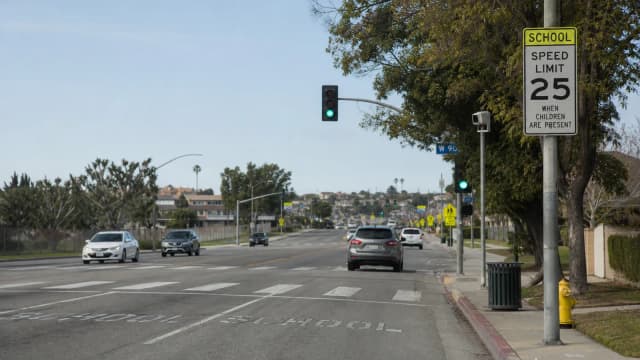
Texas also has specific limits on automated enforcement. State law prohibits a municipality from operating an automated traffic control system on a street or highway under its jurisdiction for the purpose of enforcing posted speed limits. The law describes that system as a photographic, radar, laser or other device designed to record speed and obtain images of the vehicle, plate or operator.
Red light camera enforcement is also restricted. Texas law now generally prohibits local authorities from implementing or operating photographic traffic signal enforcement systems, and prohibits issuing a civil or criminal charge or citation based on a recorded image from such a system. TxDOT notes that the 2019 law allowed certain pre-existing municipal contracts to continue only until their specified expiration date if they met the statutory conditions.
In other words, many camera-like devices on Texas roads are not ticketing cameras. They may be traffic-monitoring cameras, toll equipment, license-plate readers, construction cameras or signal equipment. For camera awareness, the Speed Camera Radar Detector app can be used to plan alerts before driving, but drivers should not treat any app or detector as complete coverage.
- Officer enforcement remains active
- Automated municipal speed enforcement is restricted
- Red light camera enforcement is generally prohibited
- Not every roadside camera issues tickets
Practical safety takeaways for Texas drivers
The short answer is that radar detectors are legal in Texas for most private-vehicle drivers, but that answer comes with boundaries. Do not use or carry one in a regulated commercial motor vehicle. Do not use a jammer, scrambler, diffuser or any device designed to interfere with police radar or laser. Do not mount anything where it blocks your view.
The safer way to think about a detector is as an awareness tool, not as permission to speed. Texas roads include high-speed rural highways, urban freeways, school zones, work zones and fast-changing local limits. The posted limit, road conditions, traffic, weather and visibility should guide your speed.
If you are unsure whether your vehicle is covered by federal commercial rules, whether an installed product includes jamming functions or whether a mount obstructs the driver’s view, get a current answer before using it on the road. Laws and enforcement practices can change, and a product marketed online may not match Texas or federal requirements.
- Private passenger vehicle: generally allowed
- Commercial motor vehicle: do not use or carry one
- Jammers and interference devices: prohibited
- Clear windshield and safe driving still required
A simple pre-drive checklist
- Set the route and alerts before moving.
- Check the first posted limit after every major turn.
- Leave enough space to adjust without abrupt braking.
- Use official sources when a rule affects your licence.